
Medical-Grade Facials vs. Spa Facials: What's the Difference?
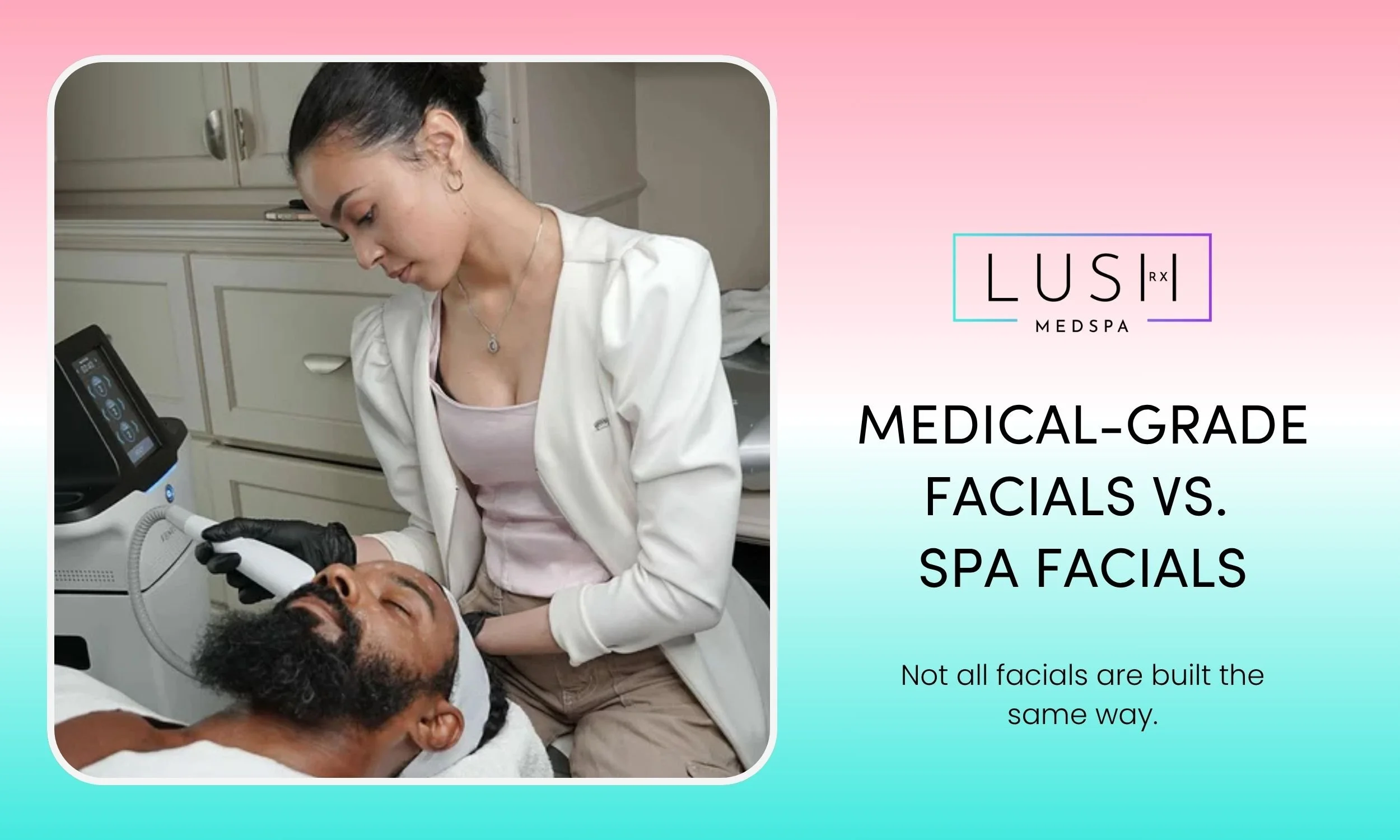
Both spa facials and medical-grade facials can leave your skin feeling refreshed, but they are designed to achieve very different things. If you are looking for relaxation, a temporary glow, and a good hour of self-care, a spa facial delivers exactly that. If you are trying to address something specific, like persistent acne, pigmentation, fine lines, or texture changes, a medical-grade facial works at a different level entirely.
Knowing what each option actually does helps you spend your time and money on the treatment that fits what you are trying to accomplish.
What Is a Traditional Spa Facial?
A traditional spa facial is a relaxation-focused skin treatment that combines cleansing, steam, exfoliation, massage, and a mask in a comfortable, sensory environment. The experience is designed to feel good, and for many people that is exactly the point.
Spa facials typically use cosmetic-grade products, meaning formulations designed for general skin maintenance rather than targeted correction. The treatment moves through its steps at a comfortable pace, with an emphasis on how your skin feels in the moment rather than measurable changes over time.
People book spa facials for a range of reasons:
Stress relief and general self-care
A boost in hydration and radiance before an event
Routine skin maintenance as part of a wellness routine
Simply enjoying the experience of being pampered
There is genuine value in all of those reasons. A spa facial does what it is designed to do, and for some people's goals, it does it very well.
What Is a Medical-Grade Facial?
A medical-grade facial is a clinical skin treatment that starts with a thorough assessment of your skin and uses active, professional-strength ingredients or technology to address specific concerns. The goal is progressive, measurable improvement over time rather than an immediate glow that fades within a few days.
These treatments are performed in a medical aesthetics setting, where providers are trained to evaluate your skin type, identify the underlying causes of your concerns, and build a treatment plan around your long-term goals. The products used contain higher concentrations of active ingredients than cosmetic-grade formulations, and the treatments often involve technology, deeper chemical exfoliation, or specialized equipment that you would not find in a traditional spa.
How Do Medical-Grade Facials and Spa Facials Differ?
The differences between medical-grade facials vs spa facials go beyond ingredient strength. They reflect fundamentally different purposes, and understanding where they diverge helps clarify which one belongs in your routine.
| Spa Facial | Medical-Grade Facial | |
|---|---|---|
| Primary goal | Relaxation and short-term refreshment | Targeted correction and long-term skin health |
| Products used | Cosmetic-grade formulations | Professional-strength active ingredients |
| Treatment depth | Surface level | Deeper skin layers |
| Provider training | Esthetician | Medical aesthetics provider with clinical training |
| Results timeline | Immediate glow, lasts a few days | Progressive improvement over weeks and months |
| Best for | Self-care, maintenance, event prep | Acne, pigmentation, fine lines, skin texture |
| Frequency | Every 4 to 6 weeks | Series of sessions, then maintenance |
Primary Goals
A spa facial is built around comfort and short-term skin refreshment. A medical-grade facial is built around correction and long-term skin health. Both can leave your skin looking and feeling better immediately afterward, but only the medical-grade option is designed to create lasting structural change in the skin.
Product Formulations
Products used in spa settings are formulated to be safe for most people without professional supervision, which limits how strong the active ingredients can be. Medical-grade formulations contain significantly higher concentrations of actives like retinoids, vitamin C derivatives, peptides, and exfoliating acids. They are used under professional guidance specifically because they are potent enough to require it.
Treatment Depth
Spa facials work at the surface level, addressing temporary dullness, surface hydration, and general texture. Medical-grade facials reach deeper into the skin through stronger exfoliation, device-assisted technology, or specialized infusion techniques, which is how they produce changes that actually hold up over time.
Provider Training
Spa estheticians are trained in relaxation techniques and general skincare application. Medical aesthetics providers have additional training in skin physiology, clinical assessment, and corrective treatment protocols, and they typically operate under physician oversight. That training enables a more sophisticated treatment plan tailored to your specific skin concerns.
Skin Concerns Better Suited to Medical-Grade Facials
Medical-grade facials are the stronger option when you have specific skin concerns you want to actually resolve rather than temporarily manage. Several common concerns respond particularly well.
Acne
Acne involves a combination of excess oil production, clogged pores, bacteria, and inflammation, and a standard spa facial does not have the tools to address all of those layers effectively. Medical-grade treatments can include clinical-strength exfoliation, targeted extractions, and ingredients that reduce bacterial activity and regulate oil production at a deeper level.
Hyperpigmentation and Sun Damage
Dark spots and uneven tone develop when certain skin cells produce too much pigment, often triggered by sun exposure, hormones, or past breakouts. Treating them requires ingredients that either slow that pigment production or speed up the process of bringing fresher, more evenly toned skin cells to the surface. Professional-strength formulations do this at concentrations that actually produce visible change over a series of treatments.
Fine Lines and Skin Texture
Smoothing fine lines and improving texture comes down to encouraging your skin to produce more collagen and turn over cells more quickly. Both of those processes need active ingredients at clinical concentrations or device-based treatments that reach below the surface. Medical-grade facials are built specifically to trigger those responses over a course of sessions, rather than just refreshing the top layer of skin.
Long-Term Skin Health
For anyone building a proactive approach to how their skin ages, medical-grade facials provide the kind of consistent, cumulative benefit that adds up meaningfully over time. Each session builds on the last, and the treatment plan evolves as your skin improves.
Why HydraFacial Is Often Considered a Medical-Grade Facial
HydraFacial occupies a unique position in this conversation because it delivers the comfort and experience of a spa facial while operating at a clinical level. It uses a patented vortex technology device to move through deep cleansing, exfoliation, extraction, and hydration in a single session, with customizable boosters that allow the treatment to be tailored to your specific skin concerns.
The extraction step removes congestion from pores more effectively than manual techniques, and the infusion step delivers active serums, including hyaluronic acid, peptides, and antioxidants, directly into the freshly cleared skin. The result is an immediate improvement in clarity, texture, and hydration that goes well beyond what a standard spa facial produces.
HydraFacial's customizability is also what makes it medically relevant. Targeted boosters can address acne, pigmentation, fine lines, or general skin health depending on what your skin needs, making it a versatile treatment option for a wide range of patients.
How Long Do Results Typically Last?
Results vary significantly between the two options, and understanding the difference helps set realistic expectations for what you are booking.
Spa Facial Results
A spa facial typically produces an immediate improvement in how your skin looks and feels, with a visible glow and temporary plumpness from surface hydration. Most people notice these effects for several days before the skin returns to its baseline. For event preparation or periodic maintenance, this timeline works well.
Medical-Grade Facial Results
Medical-grade facials produce both an immediate improvement and longer-term changes that build over subsequent sessions. Surface hydration and clarity are visible right away, and the deeper benefits, including improved texture, reduced pigmentation, and firmer skin, develop progressively over weeks and months. A treatment plan that includes regular sessions compounds those results over time, producing meaningful changes that a one-off treatment cannot achieve.
How Often Should You Get a Facial?
The right frequency depends on your goals and the type of treatment you are getting.
For general maintenance and relaxation, a spa facial every four to six weeks fits comfortably into a regular wellness routine. For corrective medical-grade treatment, your provider will typically recommend a series of sessions spaced two to four weeks apart to achieve the initial improvement, followed by maintenance visits to sustain it.
Timing also matters for significant events. Many people start a medical-grade facial plan several months before a wedding or other major occasion to allow enough time for progressive improvement to fully develop. Starting early gives the skin time to respond and settle rather than booking a single treatment the week before and hoping for dramatic results.
Seasonal skin changes are worth considering too. Treatment plans often adjust for the dryness of winter, the increased oil production of summer, and the sun damage many people accumulate through warmer months.
How to Decide Which Facial Is Right for You
The right choice between medical-grade facials vs spa facials comes down to what you actually want from the experience.
A spa facial is a strong fit if:
Relaxation and self-care are your primary goals
You want a temporary boost in radiance before an event
You enjoy the sensory experience of a traditional facial
Your skin is generally healthy and you are maintaining rather than correcting
A medical-grade facial is a stronger fit if:
You have specific concerns like acne, pigmentation, or fine lines you want to address
You want measurable, progressive improvement over time
You are building a long-term skin health plan
You have noticed your skin changing and want a more targeted approach
Many people end up incorporating both into their routine, using medical-grade treatments as the foundation of their skin health plan and spa facials for relaxation and maintenance in between.
Why a Professional Skin Assessment Matters Before Treatment
Booking a facial from a menu without a professional assessment often means guessing at what your skin actually needs. A thorough skin evaluation looks at your skin type, identifies the underlying causes of your concerns, and considers factors like your lifestyle, sun exposure history, and current skincare routine before recommending a treatment approach.
This matters because the same presenting concern, like uneven skin tone, can have multiple different causes, and the treatment that works for sun damage will not produce the same results for hormonal pigmentation. A professional assessment is what separates a treatment plan built around your skin specifically from a generic protocol applied to everyone who walks in.
Ready to Find the Right Facial for Your Skin Goals?
Spa facials and medical-grade facials serve different purposes, and both have a place depending on what your skin needs at a given time. Spa facials deliver comfort, relaxation, and short-term refreshment. Medical-grade facials deliver targeted correction, progressive improvement, and a foundation for long-term skin health.
Schedule a consultation with Lush RX Med Spa to discuss your skin concerns, explore HydraFacial and other advanced treatment options, and build a personalized plan for healthier-looking skin.