

How to Prevent Lip Filler Migration: A Practical Guide
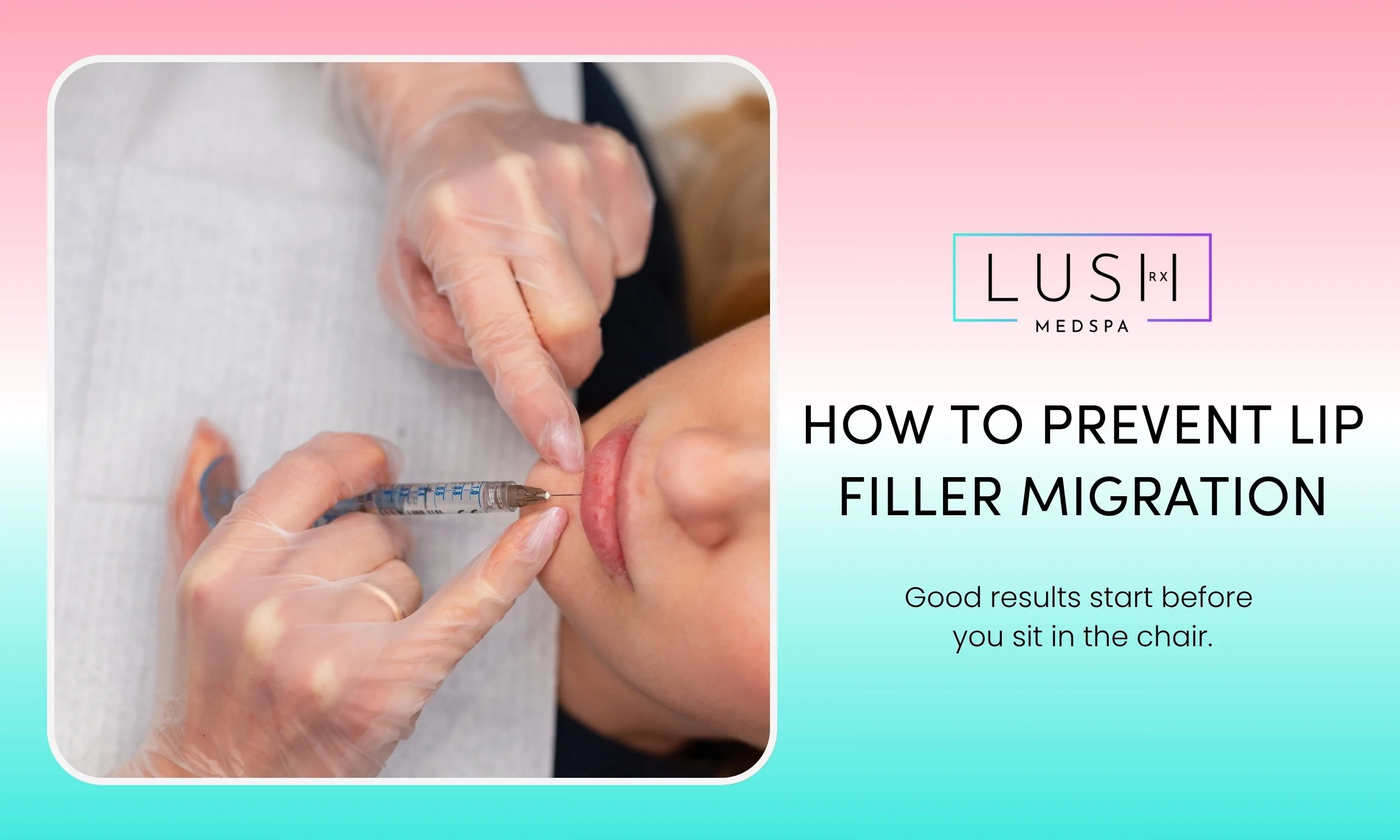
Lip filler treatments have consistently been a hit over the years, but when there's lip filler success stories, there are also lip filler migration horror stories. After seeing photos of fullness creeping above the upper lip, people have been scrambling to know how to avoid the same result.
The short answer on how to prevent lip filler migration: choose an experienced injector, keep your treatment plan conservative and gradual, use a filler suited to lip tissue, and follow the aftercare your injector gives you. None of this removes the risk completely, but it lowers it.
Migration is not always obvious, and not every change above the lip line is filler that moved. Lips have natural limits too, so more filler is not always better when you want a soft, balanced look.
Our planning is built around your facial anatomy, your balance, and your goals. In this article, we’ll talk more about what filler migration means and the practical steps that lower the chance of it.
What Is Lip Filler Migration?
Lip filler migration is when filler shows up outside the area it was meant to stay in, often above the upper lip or past the lip's natural edge. That edge is called the vermilion border, which is where the colored part of your lip meets the surrounding skin. When filler drifts past that line, the upper lip can look less defined or unusually full above the lip line. The effect is subtle in some cases and more noticeable in others.
But several things can also look like migration without being migration. Swelling, normal anatomy, aging, and filler from past treatments can all create fullness that resembles it.
Why Does Lip Filler Migration Happen?
Lip filler migration usually comes from a mix of factors rather than one single mistake. Those include:
Too much filler placed too quickly for the lip tissue available
Repeated top-ups before earlier filler has settled or been reassessed
Placement that does not respect the natural lip border or tissue layer
A filler that may not suit a patient's lip anatomy or goal
Existing filler from past treatments shaping how new filler behaves
Individual anatomy, tissue quality, and natural lip structure
Because migration can be multifactorial, it is not always possible to point to one cause. A lip shape that looks great on someone else may not suit your face or be achievable with your anatomy.
How Does Choosing the Right Injector Help Prevent Lip Filler Migration?
Choosing a skilled injector is the single biggest factor in preventing lip filler migration, because precise placement and good judgment shape the outcome more than anything else. Lips are small, mobile, and have limited space for added volume, so they reward precision and punish guesswork.
Look for a licensed, experienced injector with strong knowledge of facial anatomy and lip structure. A good provider evaluates your whole face rather than treating the lips in isolation, since the lips relate to your chin, cheeks, jawline, and overall profile.
Our planning leans on that kind of facial harmony, looking at how the lips fit the rest of your features instead of chasing a fixed shape. A thoughtful injector should also feel comfortable recommending less filler, spacing your treatments out, or suggesting a different plan when your lips have reached their natural capacity.
Before you book, ask a provider how they handle the things that shape your result:
Their approach to gradual enhancement and how they pace treatments
How they choose a product for your lip anatomy
What follow-up looks like after your appointment
How they assess and handle migration if it comes up

Why Is Gradual Lip Enhancement Important?
Gradual lip enhancement gives your lips time to adapt and lets your injector see how the tissue responds before adding more. Adding a conservative amount first creates a checkpoint to assess swelling, symmetry, shape, and how the tissue settles.
A half syringe or a single syringe may be discussed depending on your starting point, your anatomy, and your goals, but the exact volume should always be individualized.
Rushing toward a larger volume can place unnecessary pressure on the lip tissue, which is one reason staged treatment tends to produce softer, more natural-looking results. We support realistic expectations based on each person's facial structure and goals, even when that means going slower than a patient first expected.
Volume is one piece of the picture, and the product itself is another.
Does the Type of Lip Filler Matter?
Yes, the type of filler matters. Lips need a product flexible enough to move naturally while still adding the volume or definition you want. The wrong product in the right hands can still create a stiff or unnatural result.
Many lip fillers are based on hyaluronic acid, a sugar your body produces naturally that holds water and adds hydration along with volume. Fillers vary in thickness, flexibility, structure, and the area they are designed for, so they are not interchangeable.
A provider should choose a product based on your lip anatomy, tissue quality, the softness you want, and how much definition or volume the plan calls for. A filler that performs beautifully in the cheeks or jawline may be a poor fit for delicate lip tissue. The product should support the treatment plan, not dictate it. If you are still comparing options, our guide on filler vs Botox can help.
What Should You Do If You Think Your Lip Filler Has Migrated?
If you think your lip filler has migrated, book an in-person assessment with a qualified injector rather than trying to fix it yourself. Do not massage, puncture, or self-treat the area, since that can do more harm than good.
A provider can examine your lips in person and sort out what is going on. The cause might be:
Swelling that has not fully gone down
Normal anatomy or your natural lip shape
Filler left from a previous treatment
True migration past the lip border
These can look similar from the outside, so having someone will give you a more accurate assessment.
If migrated hyaluronic acid filler is confirmed, your injector may discuss hyaluronidase, an enzyme that dissolves this type of filler, as one possible option depending on your situation. It is not the automatic answer for everyone.
Some patients benefit from dissolving and letting the lips reset before considering a more conservative refill, while others need a different plan entirely.
How Can Lush RX Help You Plan Natural-Looking Lip Filler?
Lush RX Med Spa offers injectable consultations in Bellaire, TX, where the team can talk through your lip shape, your natural anatomy, any previous filler, and the level of enhancement you want. Much of how to prevent lip filler migration comes down to planning, and a consultation is where that planning starts.
We position fillers as a way to restore volume and refine contours while keeping the result natural-looking and balanced with the rest of your face.
Interested in subtle, balanced lip enhancement? Schedule a consultation at Lush RX Med Spa to discuss your lip goals, previous filler history, and a treatment plan designed around your natural features.