

What is the Best Face Lift Without Surgery?
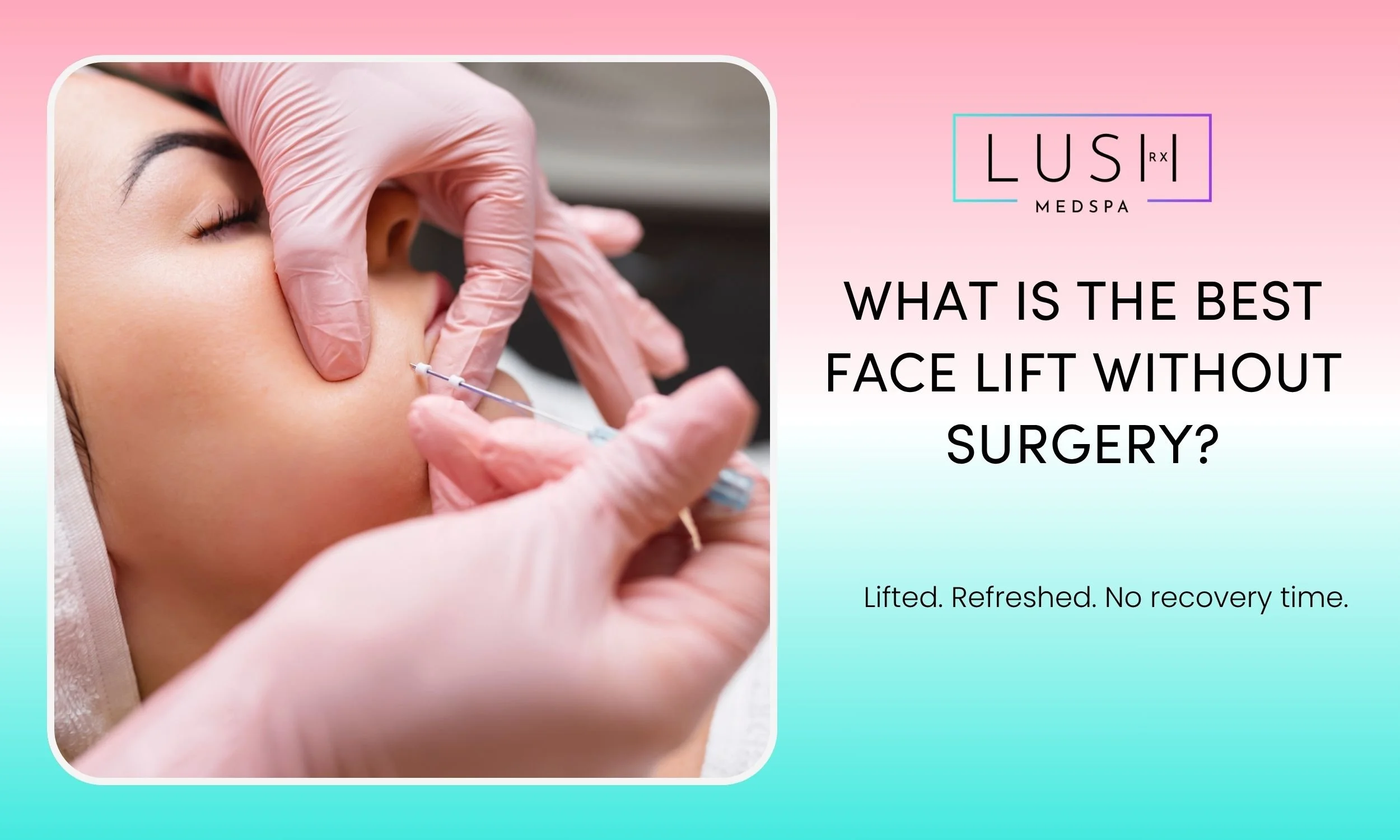
Nonsurgical facelifts have moved away from obvious, overdone results. Most people now want a lift nobody can point to. That shift is why more women are choosing treatments that soften and restore without surgery or a long recovery.
The right answer still depends on what's aging your face. Loose skin causes one kind of sagging, and lost volume causes another. Some people deal with both at once, and the treatment that works follows from figuring out which one applies to you.
In this article, we cover what a nonsurgical facelift can do and which treatment fits your concerns.
What is a Nonsurgical Facelift?
A nonsurgical facelift is an umbrella term for treatments that lift and tighten skin or restore lost volume without incisions or a surgical recovery, using energy-based devices and dissolvable threads, or injectables like fillers and neuromodulators.
These treatments can tighten mildly lax skin or restore lost volume, but they don't remove excess skin or reposition deeper tissue like surgery.
Three categories cover most of what's available:
1. Skin Tightening Treatments
Energy-based devices like HIFU (High-Intensity Focused Ultrasound) heat the deeper layers of skin to trigger new collagen growth. That collagen response is what gradually tightens mildly loose skin over the following weeks. HIFU works well for people who want a subtle lift without needles or downtime. It's usually the starting point for anyone dealing with early signs of sagging.
2. Volume-Restoring Injectables
Fillers and neuromodulators like Dysport work differently than skin tightening devices. Fillers rebuild support under the skin, while neuromodulators relax the muscles causing expression lines. Both can make the surrounding skin look more lifted, even though neither one tightens skin directly. People with hollow cheeks or deep expression lines tend to see the most benefit here.
3. Combination Treatment Plans
Most people don't age in just one way. Loose skin and lost volume often show up together, and treating only one leaves the other concern untouched. A combination plan pairs skin tightening with injectables to address both causes at once. This tends to produce a more balanced, natural result than relying on a single treatment alone.
What is the Most Effective Face Lift Without Surgery?
There’s no one-size-fits-all solution. Mild to moderate loose skin often responds well to HIFU, hollow cheeks or volume loss respond better to fillers, and more noticeable sagging may call for PDO threads.
At Lush RX, HIFU is usually the treatment your consultation starts with, since it targets the lifting most people search for. HIFU delivers focused ultrasound energy to specific depths beneath the skin, heating tissue without damaging the surface and encouraging collagen production for firmer, tighter skin.
Here’s a simple rundown of your options as a whole:
| Main Concern | Treatment Often Considered | How It Helps |
|---|---|---|
| Mild to moderate skin laxity | HIFU laser treatment | Stimulates collagen for gradual lifting and tightening |
| Sagging cheeks, jawline, or neck | PDO threads | Physically lifts tissue while stimulating collagen |
| Facial hollowness or volume loss | Dermal fillers | Restores volume and structural support |
| Crow's feet or frown lines | Botox or Dysport | Relaxes muscles that cause expression lines |
| Multiple concerns at once | Combination plan | Addresses laxity, volume, and wrinkles together |
What Areas Can HIFU Treat?
HIFU works well anywhere on the face and neck where mild to moderate skin laxity is the concern, since it doesn't target one specific area more than another.
Face
On the face, HIFU is often used for looser skin around the cheeks and jawline. These areas tend to show early sagging before other parts of the face do. Patients typically see gradual firming as new collagen builds over the following months. Results here work best on skin that's mildly to moderately loose.
Neck
On the neck, HIFU can firm skin that has started to sag with age. Neck skin is thinner than facial skin, so results often need a few sessions to build. Many patients pair neck treatment with facial HIFU for a more even result. This combination addresses sagging along the jawline and neck at the same time.
When is a Liquid Facelift a Better Option?
A liquid facelift like Sculptra works well when lost facial volume drives the sagging look, using fillers, neuromodulators, or both to restore support in the cheeks, lips, or under-eye area.
Restoring volume can make surrounding tissue appear more lifted, though it doesn't tighten loose skin, and overfilling should be avoided.
Hyaluronic Acid Dermal Fillers
Fillers use hyaluronic acid to plump areas like the cheeks or under-eye hollows. This gives immediate volume without any downtime or recovery period needed. Results typically last between 6 and 18 months, depending on the product used. Many patients return for touch-ups once volume starts to fade naturally.
Neuromodulators for Expression Lines
Botox and Dysport relax the muscles behind dynamic wrinkles like crow's feet and frown lines. These lines form from repeated muscle movement, not from loose skin or lost volume. Relaxing the muscle smooths the line without changing the surrounding skin's structure. Results typically last three to four months before a follow-up treatment is needed.
Strategic Facial Support
Combining fillers and neuromodulators can create a lifted, youthful look without relying on one treatment. Fillers handle volume loss, while neuromodulators handle muscle-driven lines and creases. Using both together addresses more of what's actually causing the aged appearance. This pairing often gives a more complete result than either treatment alone.
Injectables restore what's missing beneath the skin. PDO threads take a more physical approach instead.
How Do PDO Threads Compare With HIFU?
PDO threads place dissolvable medical-grade sutures beneath the skin to lift sagging tissue, while HIFU relies on collagen stimulation alone. Both are nonsurgical, but threads involve more direct intervention.
Threads anchor into the skin for an immediate lift, and new collagen continues building as they dissolve over the following months. The full procedure takes 30 to 60 minutes, with minimal downtime.
Recovery and Maintenance
Most people return to daily activities almost immediately, with full results around three months, lasting up to 18 months.
Best-Fit Concerns
PDO threads work well for the cheeks, jawline, neck, and brow, especially if you want a more immediate lift than HIFU alone provides.
Which Nonsurgical Facelift Is Best for Your Concern?
The best nonsurgical facelift for you depends on which concern bothers you most:
Mild Loose Skin Around the Face or Neck
HIFU is usually the first option to consider, especially if you'd rather avoid needles.
Sagging Cheeks, Jawline, or Neck
PDO threads may help when you want a more immediate lift alongside gradual collagen support.
Hollow Cheeks or Under-Eye Volume Loss
Dermal fillers tend to work better here than skin tightening alone.
Crow's Feet, Frown Lines, or Other Expression Lines
Botox or Dysport addresses muscle movement, which skin tightening and fillers don't target.
Jowls and More Advanced Sagging
Nonsurgical treatments may offer limited improvement here, and substantial excess skin may call for a surgical consultation.
Multiple Signs of Facial Aging
A combination plan can address laxity and volume as separate concerns within one treatment strategy.
How Much Can a Nonsurgical Facelift Lift?
A nonsurgical facelift can produce subtle to moderate improvement, generally working best for early or mild aging. However, it can't remove a large amount of excess skin or reposition deeper tissue like surgery. It does offer:
1. Gradual Versus Immediate Improvement
HIFU's collagen response builds gradually over months, while PDO threads and fillers tend to show more immediate correction.
2. Natural-Looking Results
Natural-looking results come from matching the treatment to what's causing your aging, with realistic planning from the start.
What Should You Expect From a Nonsurgical Facelift Treatment?
A nonsurgical facelift begins with a consultation, and the process itself depends on the treatment:
HIFU delivers ultrasound energy in a series of passes
PDO threads are inserted under local anesthetic
Injectables are placed with a series of small injections
Before the Appointment
Your provider reviews your skin and goals to confirm which treatment fits best.
During Treatment
Most treatments take well under an hour, and comfort measures like local anesthetic or cooling are used as needed.
After Treatment
Downtime is minimal for most people, though temporary redness or swelling can occur.
Treatment day is only the beginning. The following weeks are where the change becomes visible.
When Will You See Results?
Results show up on different timelines depending on the treatment you choose:
Early Changes
PDO threads and fillers show a noticeable difference right away, while HIFU results take longer to appear since they depend on new collagen forming.
Progressive Collagen Development
New collagen takes two to three months to fully develop, which is why HIFU and PDO threads both continue improving well after your appointment.
Maintaining the Result
HIFU results can last up to a year or more, PDO threads typically last 12 to 18 months, fillers last 6 to 18 months depending on the product, and Botox or Dysport lasts three to four months.
That timeline sets the stage for figuring out if you're a good candidate in the first place.
Who is a Good Candidate for a Nonsurgical Facelift?
Good candidates share a few common traits:
Have mild to moderate skin laxity
Want subtle, natural-looking improvement
Prefer to avoid surgery or lengthy downtime
Have realistic expectations
Are in good overall health
A nonsurgical procedure may be less suitable for someone who:
Wants dramatic or immediate surgical-level lifting
Has substantial excess skin
Has a medical condition that affects eligibility
Is pregnant or nursing, depending on provider guidance
Cannot tolerate the expected treatment sensations
What Are the Biggest Myths About Facelifts Without Surgery?
Marketing claims around nonsurgical facelifts often overpromise or understate, such as:
Myth #1: One Treatment is Best for Everyone
Skin laxity and volume loss each need a different treatment approach. Treating both the same way rarely gives a balanced or natural result. A provider who assesses your specific concern first will recommend the right fit. Assuming one treatment works for every face usually leads to disappointment.
Myth #2: A Nonsurgical Facelift Works Like Surgery
Nonsurgical treatments don't remove excess skin or reposition deeper facial tissue. Surgery can achieve results these treatments simply aren't designed to reach. Nonsurgical options still offer real, visible improvement for mild to moderate concerns. Setting realistic expectations upfront leads to a more satisfying outcome overall.
Myth #3: Skin Tightening Results Are Immediate
Collagen-stimulating treatments like HIFU develop gradually over weeks and months. Patients expecting instant results after a single HIFU session are often disappointed. The tightening effect builds slowly as new collagen forms beneath the skin. Understanding this timeline helps set expectations before treatment even begins.
Myth #4: Fillers Tighten Loose Skin
Fillers restore lost support and volume, but they don't tighten excess skin. Loose skin needs a different approach, like HIFU or PDO threads instead. Using fillers alone on truly loose skin often leads to an overfilled look. Matching the treatment to the actual cause avoids this common mistake.
Myth #5: Home Remedies Can Lift Sagging Tissue
Skincare products can improve hydration and the surface appearance of skin. What they can't do is reposition tissue that has actually started to sag. Serums and creams work at a much shallower level than in-office treatments. Real lifting requires a treatment that reaches deeper layers of skin.
Myth #6: More Treatment Creates More Lift
Overtreatment can lead to unnatural volume or results that don't suit your face. More filler or more sessions doesn't automatically mean a better outcome. A provider who paces treatment based on your results tends to get better long-term outcomes. Restraint, not repetition, is usually what produces the most natural look.
Get Your Best Nonsurgical Facelift in Bellaire, TX
At the end of the day, the best face lift without surgery still depends on what's causing your concern. HIFU suits gradual lifting, and PDO threads work well for a more immediate lift. Fillers or Botox tend to help more with volume loss or expression lines.
A facial assessment gives you a clearer answer than choosing a treatment based on popularity. At Lush RX, your plan is built around your specific concerns, with HIFU, PDO threads, injectables, or a combination available in Bellaire, TX.
Schedule a consultation at our Bellaire location to find out which treatment, or combination of treatments, best fits your concerns.