

How to Get Rid of Forehead Wrinkles Without Surgery
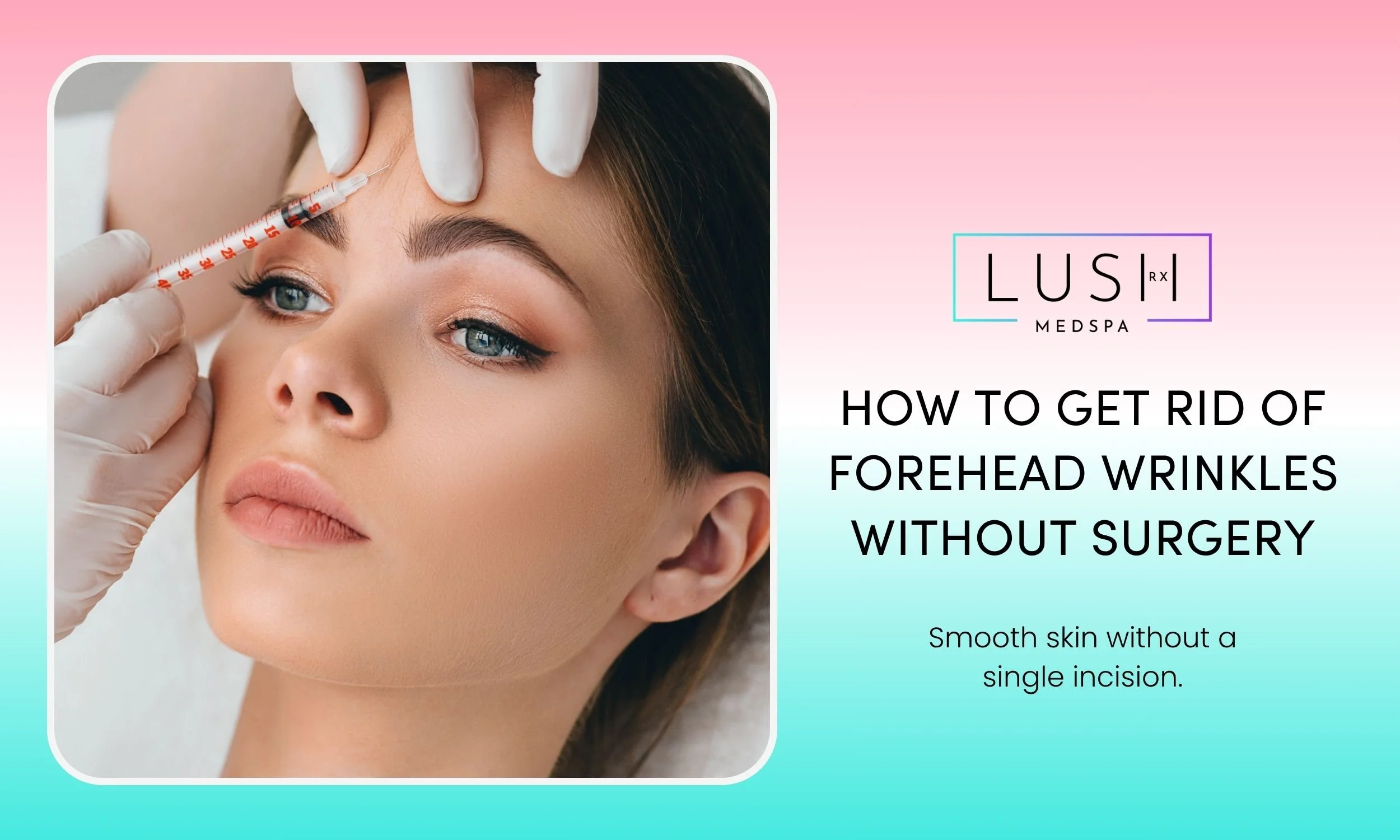
For most people who think of wrinkles, Botox seems like the default way to go. But what if we were to tell you there are multiple non-surgical options that can address forehead lines just as effectively, and in some cases more precisely, depending on what is actually causing them?
Forehead wrinkles tend to show up gradually. At first they only appear when you raise your brows or squint. Then one day you notice them sitting there at rest, and they have been doing that for a while without you realizing it.
The key is matching the right approach to the right type of wrinkle. Different lines have different causes, and treating all of them the same way is one of the most common reasons people feel underwhelmed by their results.
Why Do Forehead Wrinkles Develop Over Time?
Forehead wrinkles develop from a combination of muscle activity, collagen loss, sun damage, and skin dehydration. Most people are dealing with more than one of these at once, which is why treating a single cause rarely produces the full improvement people are hoping for.
Repetitive Facial Expressions
Every time you raise your eyebrows, furrow your brow, or squint, the muscles beneath your skin contract and fold the skin above them. Over thousands of repetitions across years, those folds start to leave a permanent impression even after your face relaxes. These are called dynamic wrinkles, and they are the most common type people notice first on the forehead.
Collagen Loss
Collagen is the structural protein that keeps your skin firm and resilient. Your body produces it steadily through your 20s, but production slows from your late 20s onward. The skin gradually becomes thinner and less able to spring back, and lines that used to disappear when your face relaxed start staying put.
Sun Exposure
UV rays break down both collagen and elastin, the proteins responsible for keeping skin structured and flexible. The forehead is one of the most consistently sun-exposed areas of the face, and the cumulative effect of years of unprotected exposure shows up as earlier and deeper lines than you would otherwise develop.
Dehydration
Dehydrated skin loses its ability to reflect light smoothly, which makes surface lines appear more pronounced than they actually are. A well-hydrated skin barrier plumps the spaces between skin cells and reduces how visible fine lines look, even without changing the structure underneath.
Are All Forehead Wrinkles the Same?
Forehead wrinkles fall into two main categories, and knowing which one you are dealing with directly determines which treatments will actually help.
Dynamic Wrinkles
Dynamic wrinkles are movement-related. They appear when you animate your face and may or may not be visible at rest depending on how long they have been forming. Neurotoxin treatments like Dysport target this type specifically because they address the muscle activity creating the line rather than the skin itself.
Static Wrinkles
Static wrinkles are visible even when your face is completely relaxed. They tend to look etched into the surface and develop from long-term collagen loss and repeated skin folding over time. These respond better to treatments that rebuild collagen, improve skin texture, and address the structural changes happening underneath.
Skincare Ingredients That Help With Forehead Wrinkles
The right topical ingredients, used consistently, make a meaningful difference in how forehead lines look and how quickly new ones form. Four are worth knowing well.
Retinoids
Retinoids, which include over-the-counter retinol and prescription tretinoin, accelerate cell turnover and stimulate collagen production in the deeper layers of your skin. They are the most clinically supported topical option for reducing fine lines and improving texture. Prescription-strength tretinoin works faster, while retinol is a gentler starting point for sensitive skin.
Peptides
Peptides are short chains of amino acids that signal your skin to produce more collagen and support tissue repair. Certain ones like Argireline are specifically designed to soften expression lines by mildly reducing muscle contractions at the skin surface. They work more subtly than retinoids, but as part of a consistent routine, they contribute to visible improvement over time.
Hyaluronic Acid
Hyaluronic acid (such as those in lip injections) is a naturally occurring molecule in your body that attracts and holds water in the skin. Topical serums and moisturizers containing it maintain the plumpness that reduces how noticeable fine lines appear, making a genuine difference in how your skin looks and feels day to day.
Sunscreen
Sunscreen is the most effective tool for preventing new wrinkles and stopping existing ones from deepening. SPF 30 or higher daily, even on overcast days or when you are mostly indoors, protects the collagen your skin still has and preserves the results of any professional treatments you invest in.
How Dysport Reduces Forehead Wrinkles
Dysport is one of the most effective non-surgical options for forehead wrinkles driven by repetitive muscle movement. It works by temporarily relaxing the specific muscles responsible for forehead creasing, reducing the contractions that deepen lines over time.
When placed strategically by a skilled provider, Dysport softens movement without eliminating natural expression. The result looks like you, just more rested. For static lines already visible at rest, it is often combined with collagen-stimulating treatments to address both the movement and the skin quality components together.
Results appear within two to five days and reach their full effect within one to two weeks, with most people maintaining them for three to four months before retreating.
RF Microneedling for Forehead Wrinkles
RF microneedling can meaningfully improve forehead wrinkles, particularly static lines and overall skin texture. The treatment uses tiny needles to create controlled micro-injuries in the skin while delivering radiofrequency energy into the deeper tissue layers, triggering your skin's natural collagen and elastin response.
The result is firmer, thicker skin that holds its shape better and reflects light more smoothly. Most people see progressive improvement over three to six months as the new collagen matures, with results continuing to develop after the treatment sessions are complete.
Because RF microneedling addresses structural skin changes rather than muscle activity, it pairs particularly well with Dysport for patients dealing with both types of forehead lines.
When Laser Skin Rejuvenation Makes Sense
Laser skin rejuvenation is a strong option when forehead concerns include surface texture, sun damage, uneven tone, or fine lines driven primarily by skin quality. Laser treatments deliver controlled energy to stimulate collagen production, resurface the outer layers, and improve overall skin clarity and smoothness.
The right approach depends on your skin type, the severity of your lines, and how much downtime you can accommodate:
More ablative treatments produce more dramatic results with longer recovery
Non-ablative options offer gradual improvement with minimal disruption
Your provider will match the approach to your skin and your schedule
Why Combination Treatments Often Work Best
Forehead wrinkles rarely have a single cause, so a single treatment rarely produces the best possible outcome. Combining approaches that address different aspects of the problem consistently produces results that look more natural and last longer.
Dysport Plus RF Microneedling
Dysport relaxes the muscle activity driving dynamic lines while RF microneedling rebuilds lost collagen. Together they address movement and structure simultaneously, and the muscle relaxation from Dysport allows the skin to recover more smoothly between RF sessions.
Professional Treatments Plus Medical-Grade Skincare
In-office treatments produce their best results when supported by a consistent at-home routine using retinoids, antioxidants, and daily SPF. These extend the benefits of professional treatments and slow the rate at which new lines form between sessions.
Prevention Plus Correction
Starting neurotoxin treatment before lines become deeply etched makes them significantly easier to address. Maintaining collagen-stimulating treatments alongside this prevents the structural changes that turn dynamic lines into static ones over time.
Daily Habits That Help Slow the Process
Daily habits have a meaningful cumulative effect over months and years. None of them replace professional treatment, but they influence how quickly existing lines progress and how well your skin responds to the treatments you invest in.
The ones that consistently make the most difference:
Wearing broad-spectrum SPF 30 or higher every day, including in winter and on cloudy days
Staying consistently hydrated to support skin barrier function
Getting quality sleep, since skin repair and collagen synthesis peak overnight
Managing chronic stress, which elevates cortisol and accelerates collagen breakdown
Using a consistent skincare routine with retinoids, peptides, and antioxidants
The forehead is especially exposed to sun and subject to habitual expressions, so these habits have a particularly noticeable impact on this specific area over time.
How Long Does Improvement Actually Take?
Different treatments work on very different timelines, and having accurate expectations from the start makes the process far less frustrating.
Skincare
Retinoids typically produce noticeable changes in skin texture and fine lines within eight to twelve weeks of consistent use, with continued improvement over six to twelve months. Most people see the most significant results after six months of daily use with a formulation strong enough for their skin type.
Dysport
Results appear within two to five days and reach full effect within one to two weeks. Most people maintain results for three to four months before retreating. With consistent treatment over time, some find their intervals gradually extend as the targeted muscles respond to regular relaxation.
Collagen-Stimulating Treatments
RF microneedling and laser treatments work by triggering a biological healing response, so improvement is gradual. Most people see initial changes within four to six weeks, with the full result visible at three to six months as new collagen matures. A series of sessions spaced several weeks apart is typically recommended for optimal results.
Choosing the Right Treatment Plan
Choosing how to get rid of forehead wrinkles without surgery starts with an honest look at what is actually driving them. The severity of your lines, your skin quality, your age, your lifestyle, and how much downtime you can accommodate all shape which combination of treatments makes the most sense for you.
Asking yourself a few questions before your consultation helps clarify where to focus:
Are your lines visible only when you move your face, or also at rest?
Has your skin texture changed alongside the lines, or is it mainly the movement?
Are you looking for quick visible improvement, or focused on long-term skin health?
How much downtime can you realistically accommodate?
A provider assessment is the most reliable next step, since what looks like a simple forehead line issue often involves multiple contributing factors that only become clear on examination.
Ready to Explore Non-Surgical Forehead Wrinkle Treatments?
Forehead wrinkles develop from both muscle movement and structural skin changes, and the most effective treatment plans address both. Skincare with retinoids and peptides, Dysport for dynamic lines, RF microneedling for collagen rebuilding, and laser rejuvenation for surface texture each play a distinct role. Combining them thoughtfully produces results that look natural and hold up over time.
Schedule a consultation with Lush RX Med Spa to discuss your forehead concerns, evaluate your skin, and build a personalized non-surgical plan designed around your goals and your timeline.